
The PSC Climate-Aware Practice Capability Framework is now live!
Over the last 12 months the PSC team has been meticulously beavering away on an exciting project, our new Capability Framework. Made up of eight capabilities, the Framework acts as a guiding structure for practitioners to integrate climate awareness to their work.
It’s been a characteristically conscientious and iterative process involving a lot of deep reflection, research and conversation. It also informs the structure of our soon-to-be launched self-paced online Professional Development Course. A lot of exciting and emergent exploration has been going on at PSC over the last year.
One of the delightful side-effects of this process for me has been the re-invigoration of my own interrogation of what it means to be in climate-aware practice as a facilitator. What are the core capabilities that have grown in me over the last 15 years? Where do I want to extend my root system as I continue to grow and support others?
Like the climate journey, the Framework's 8 Capabilities that build the path of climate-aware practice, are not linear. It’s more like a spiral, revisiting each capability again and again, deepening and opening to the layers of complexity contained within.
What has captured my curious heart and living practice most recently is Capability Number 7: Narrative and Meaning-Making. Before I was a climate activist, before I was a facilitator, before I was a social researcher on climate change, I was —and still am— a storyteller.
I love a good story. In recent years I’ve been very interested in more ancient stories, the myths and tales spoken around the hearth fires. These stories usually contain many levels and layers that slowly reveal themselves over time through our own lived experiences. These kinds of stories are not didactic or moralistic, but invitations to come alive more fully to the primordial threads of human existence and to track how they are weaving through our own lives.
The stories we tell about ourselves and the world matter so deeply. They shape us, they shape the kind of world we believe is possible, they direct our attention and our action.
At first when we begin to articulate and relate to our own climate journey (the way that we have engaged with and been shaped by the polycrisis that we are all living through), we notice and make sense of who we have been so far, what we have done, and perhaps what we needed at a certain time, but did not receive. Sharing and engaging with our personal climate stories can provide clarity about our needs now, and the direction we want to tend our lives in.
An understanding of our own climate journeys is also incredibly useful in how we, as climate-aware practitioners, are then able to hear, empathise, situate and contextualise other people’s deepest feelings, quandaries, challenges and questions about the climate crisis and their roles in it. More and more, I find myself opening workshops with an explanation of what a ‘climate journey’ is. This helps people get a sense of where they might be on their own journey at this moment in time, and thus what they might be needing from the workshop and in their lives beyond that workshop.
But the benefits of growing our capabilities around Narrative and Meaning Making as climate-aware practitioners extends far beyond this. As we settle and stabilise in our understanding of a climate journey, we also begin to grasp between our fingers the individual threads that are part of an infinitely larger fabric. One that extends behind us into deep time, and beyond us into the future. The tapestry that weaves into larger collective stories of pain and harm, of survival and healing.
We might begin to experience our own story in relation to these larger stories, as intimately interwoven, not in an abstract moralising way, but in an enlivening, meaningful way. It may elicit more questions than answers, and perhaps more joy or pain than we were prepared for. Fortunately, when held with compassion, pain can be a gateway rather than a block (see Capability 8: Practitioner Self-care and Regenerative Communities!).
I have found the experience of interconnection through narrative and meaning making supports a heartfelt and embodied belonging to the whole, not just an intellectual commitment to doing the ‘right thing’.
This in turn, widens my sense of responsibility amidst the paradox that my own story is but a mere thread in the immeasurably vast fabric of life on Earth.
As we launch both the Climate-Aware Practice Capability Framework and our new Professional Development Program, we’d love to hear from you. Which capabilities speak to your story? Where are you looking to grow and deepen? We invite you to join us in one of our upcoming webinars where we will share the framework in more detail and offer some space for exploring which capabilities speak to you.
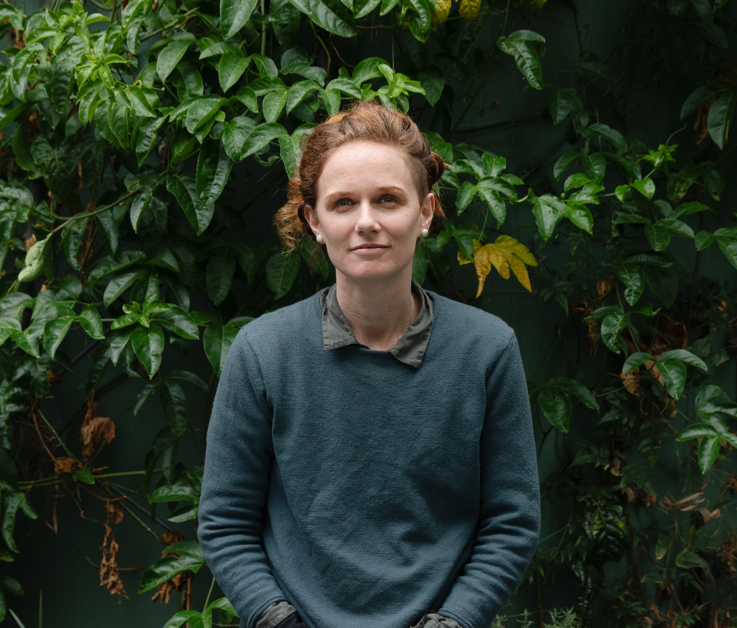
Author: Dr Beth Hill. Over the last ten years, Beth has worked as a facilitator with individuals, groups and communities exploring despair, grief, burnout, hope and meaningful engagement with climate change. Her facilitation is rooted in the Work that Reconnects, deep ecology, imaginative nature connection, mindfulness and compassion practices that bring us back to our living earth bodies as sites of transformation and connection.